writings from london

Tuesday, 30 June 2009

The Prostitute - A Short Story - Part II

Some of the men speculated that she was a rich widow, making her way out to California. Other, older and more logical fellows surmised that she was far too young to be a widow, and that she must be an orphan heading to make her fortune. This would have been a logical notion, except for the fact that her obvious affluence, and fine garments suggested that she was anything but a poor orphan. And so the speculation continued through the week, with much expectation for Sunday's service. Goodson was the kind of town that all attended the Reverend's services, dutifully on Sunday's, and this was to be no exception. Indeed it was the only real opportunity that the whole town got to meet, and catch up on gossip and for the children from the adjoining farms to take a break from the work of the warm spring to play. Naturally all were expectant that this new young thing would attend, especially the bolder younger men, who were keep as mustard to get to know whatever they could about her.

And so it was that Sunday rolled in. Jake was in his finest shirt, lovingly ironed that morning by his wife Molly. Their children stood bathed and beaming, the perfect image of cherubic beauty. Stephen was there, his wife Alma standing by his side. Indeed the whole town was there, filing into the pews and awaiting the Reverend. The weather was hot, and the reverend kept the sermon short, for the heat normally bothered the worshipers in the stifling church building. His this Irish accent bellowed through his weekly reading, bouncing around the whitewashed wooden walls and into the ears of the whole town. The only problem was that this week, the town was rather distracted. It was not that they had no interest in Mathew’s gospel, or the Reverend's message that asked the people of the town to do as Jesus did, and resist the temptation faced before him, even in the face of such hunger in the desert.
It was just that the young lady from the saloon was distracting them. But this was a distraction by proxy, for as the town had gathered at the church, she has remained simply in the saloon. It was her absence that has led the congregation to distraction, and by the end of the sermon not one of the congregation could recall any of the sermon recounted to them, such was the strength of whispers, accusations and gossip that had run through the pews on the hot June morning. Even after the service, as they all took lemonade and the children played in the courtyard, the gossip had brought an infamy about this mysterious woman, even before anyone even knew her name or purpose.

Now this infamy had a simple result, for that evening, nearly all the men filed into the saloon, now with a viable subject about which to converse. Some surmised that she must have been ill, and that the warm season was not treating her well. And when she did not descend they all left, certain that this indeed must be the reason to explain her absence from Church.

Another many days passed, and one cool afternoon Jake sent Jacob with an order for nails and some timber into the town. He knew that Jacob, being younger at just eighteen would most likely mill about with the other negro's on similar errands in town. He knew equally well that Jacob was partial to a brief game of dice with them if the opportunity arose, but on this occasion he had no choice, since Abraham had fallen ill with heatstroke. Jacob was partial to the moments of pleasure that a slaves life would yield him, and being more inquisitive and more cock-sure than his older brother, had a lower threshold for temptation. So when he noted the now notorious young lady, taking a walk in the shade down by the stream, he was could not resist the chance. He skipped his way down until he was level with her, deciding that if no one else in the town would talk with her, he would have the guts to be the first.

"Mighty hot for a stroll if you excuse my for sayin'," he ventured by way of small talk. He grinned with such disarming mischief and good humour that she could not help but break into a smile herself.
"I make it a point never to talk about the weather," she replied cutly but still smiling, "for the weather comes about every day, and as such is never novel enough to warrant thought. And besides, if one remain a prisoner of the heat, then one might not leave the house for near enough two months at this time of year." He voice was refined for the most part, but at moments seemed to be affected with a twang of a country girl made good, not that Jacob noticed. Having dropped in step with her, he was now distracted by her full and prominent busom, elevated by the tight whalebone corset, and showed off the curve of her round hips beneath. The light, white dress she wore gently brushed the golden earth as she walked, staining the edges.
"Well...I s'pose....," he managed though his eyes were making a sinner of his soul. They walked on a little in silence. She was untroubled by his presence. The warm wind rushed and blew a ghostly life into the surrounding trees, their leaves caressing one another in the afternoon sunlight.
"Ma'm," he asked, suddenly taken by a bout of shyness. "The town's all talkin' and well...." he paused, at a loss as to the phrasing of such a delicate subject with someone wholly unknown to him. She smiled broadly, sensing his sudden awkwardness. "Yes?" she said encouragingly. He summoned the courage, and yet it was the courage of a child about to take a spoonful of medicine. "Why wasn't you at church on Sund'y?" he blurted. "Was you ill?" he added, almost to excuse the boldness of the preceding question. They walked on in silence, until it became excruciating. Jacob's nerves got the better of him, and he began babbling just to fill the overwhelming silence, "..'cause o' the folks is sayin' that you is sick wit' summin' and the others thinkin' that you is a heathen..." She stopped walking, the simple action cutting his words short. She turned to him slowly and gazed into his boyish face. Beads of sweat were gathering on his brow, glistening in the sunlight, as he looked back at her. "What do you think?" she asked quietly, her breasts gently rising with her breathing. The distraction was too much for the teenager, who had already lost his train of thought. "Er...um...I...I...," he managed, until she raised a slender white finger and placed across his full lips. "Bring a present for Ms. Clarissa this evening and I till tell you all about what I was doing," she whispered, leaning into him, so that her firm breasts touched his chest gently. He sensed the sweet smell of fine soap rise from her finger tip. After what seemed like an eternity she removed it and, replacing it with a soft and slow kiss from her perfumed lips. "Now you better be on your way," she said, staring at him with only the faintest semblance of a smile. He turned, his heart pounding in his chest so loud he was sure it could be heard across the water. After a long gaze over his shoulder, he began to bounce back up to the path into the town centre.

....to be continued.....

Saturday, 27 June 2009

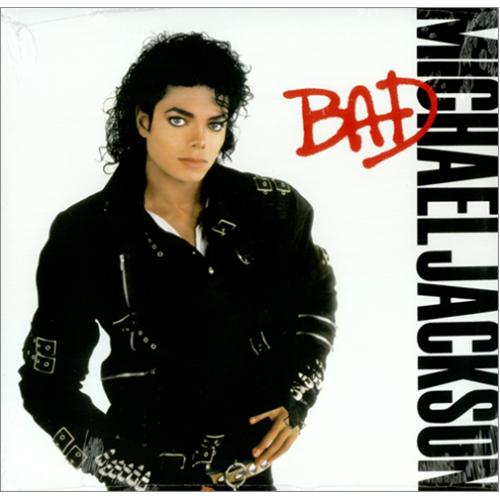
Michael Jackson and Me


A strange thing happened to me yesterday. I woke up and Michael Jackson was dead. It was the strangest feeling I have had for a very long time. Obviously I understand that he was a human being, and that his end would come sooner or later, and undoubtedly sooner than my own (his being thirty years my senior), and yet there was a surreal atmosphere that pervaded the reality of the event. I am now living in a world without Michael Jackson. This dawned on me most vividly as I sat watching a tribute doc to his life on T4.

My own relationship with Michael started as far back as I can remember. As a four year old I recall being mesmerized by the moonwalk, attempting to emulate it (to no avail) with my brother on the carpet of my parents apartment in Tehran. All this left us with was frustration and carpet burns. I remember spinning and strutting and yet sure that somehow, no matter how much I practice I would put in, be unable to do it like Michael. We went through the Thriller experience while I was young, and then through Billie Jean and all the other hits of the eighties. This was while I was still living in Tehran during the Iran-Iraq war. My parents would tease me as a child, and ask me to preform my own rendition of the Jackson dancing at parties when guests came round; my own childish version of the routine.

Then coming to London, the relationship continued, through the best way I can describe it is as a long distance affair. I was, I must admit most into Michael in the late eighties, when Bad and Smooth Criminal were the pinnacle of Jackson in my memory. I recall the first birthday party to which I had been invited, a classmate called Juan Pablo Lopez. It was the first time I had been to a birthday party outside my immediate family. I was 10 years old, and I have a vivid recollection of making a Michael Jackson mix tape, it was a black casio tape, with a white labe written in green ink, which was eventually played in the latter half of the party, and by my persistent request.

My uncle owned a pizzeria in Camden through these years, and between 11 and 13 I would make random trips up to hang out there and play through his music collection. The Michael Jackson greatest hits album was always a favourite. This was when I first discovered Dirty Diana, huddled beneath the cash register and endlessly flicking through the tracks of the CD, much to the annoyance of the customers.

Then there were the videos of the nineties. Of greatest note to me was the morphing sequence at the end of 'Black and White', ending with the camera pulling out to show the artifice of the video makers construct. I also loved the drama of the young boy arguing with his parents about the volume of the music at the start of that video; a the non sequiter that somehow attached me to the video in shared and universal adolescent experience. 'Scream' was another favorite, though I suspect that for the hormonal teenager that I was Michael was playing second fiddle to Janet's bikini and breasts.

And from this point Michael really feel off my radar. I recall his trip to the Oxford Union to talk, not because I was there, but because of the queues that spanned from the Union, along Cornmarket Street and all down Broad St, a distance of at least half a kilometer.

Sporadic reprisals have sprung up over recent years, but for me the core of the Michael Jackson that I knew ended in the early ninties. His most important tracks to me were 'Bad', and 'Smooth Criminal', simply because they somehow defined that period in my life, moving to London, and yet still being able to bring Michael with me.

And this is the genius of Michael Jackson. Just looking at the facebook posts when the news broke, you realised that everyone has their own, personal relationship with him. Peter Morely commented on the Newsnight special about the different faces of Jackson, and yet it is somehow so much more personal than that. Everyone can chart the interconnection of their own life with Michael Jackson, and knowing that no matter how old you are, Michael Jackson will still be Michael Jackson. And this was why its was so strange that Jackson is no more. He was timeless, and not of an era, and in this was he actually became his icon, Peter Pan.

I must admit, that as i sat on the couch watching the various videos play through from the eighties onward, a tear did creep into my eye for the sense of loss, not of a musician or a celebrity, but of a part of my youth that he so strongly represented.

Friday, 26 June 2009

The Prostitute - A Short Story - Part I

In the wide open plains of the United States at the turn of the 19th century there sprung up a great many little towns. These were made up of good, wholesome folk who believed that theirs was the lot of God. And Goodson, Kansas was no exception. Laid out about 200 miles east of the Appalachian mountains, the small community had come out west seeking their fortunes. Resolved in their wholesomeness, they moved in and built a church, a town hall, and a post office through which the new fangled telegraphs could run and all manner of other necessities needed for a prosperous young town to possess. They also built a saloon, which also doubled as the local inn, so as t allow weary travelers on the road to California food and accommodation. As the size of the congregation grew, so did the diversity of the people. There were the original farmers, who were there to plough the land and sow the cotton that was the basic commodity of the village. Farmers like Jake, a middle aged man with a wife and young daughter. He would toil away in his fields with his slaves, Abraham and Jacob during the hot summer days, and at night he would return home to his wife's home cooking. Later, once he had eaten a simple meal of corn and sometimes meat, he would tell his young daughter stories until she faded off into the warm arms of sleep. Then there was Stephen, the smith who sweated over the blazing coals to show the horses and nags of the farmers. He supported his family, two young sons and spent his free time teaching them how to fish in the river that ran through the village. There were also a great many other men who lived in the village, until the total population reached to over two thousand souls, each of good and wholesome stock.

Indeed the village was full of men like Jake, who were working their fields and making a life for themselves, safe in the knowledge that they were living well before God and man alike. Reverend Quaid, an Irishman who had left home to spread the word of God and look after his lambs presided over the congregation. An austere man of later years Reverend Quaid believed in the simple code of the Bible, and the virtue of hard work. He read to congregation from the scripture on Sunday mornings, and heard their confessions in the afternoon, absolving them of any transgressions that might come about through moments of weakness. He did this for Abraham and Jacob, even despite their being coloured, because Quaid believed that they were still creations of God, and so worthy of his forgiveness, as he did of Jake and Stephen and all their wives and children. And so the town prospered and grew and all was well with Goodson.

Then one day, as the sun was setting and the cool breeze whistled through the main street, a peculiar carriage drew into the village, and set still in front of the inn. This was not unusual in itself since the residents were used to having lodgers come through their small corner of the earth. But they were shocked at the young lady who disembarked that balmy evening. She was dressed in the finest Parisian fashions, with a bonnet of bright crimson such that made all the wives right green with envy. When she sashayed into the saloon for the first time her figure caught all of the men so unaware that a moment of silence descended over the usual din of good cheer. She was a young little thing, no older than twenty but despite her few years she had a fierce fire behind her cobalt blue eyes that none of the men could have imagined. Her fine hips were shown off through the luxurious dress that she wore, and skin so pale and cool it might as well have been made from the finest porcelain.

She took a room at the inn, and had her numerous cases taken up, whereupon she paid the saloon owner in crisp cash notes. And there it was she stayed for the first few nights. She would come down in the evenings, dine alone in the restaurant on whatever food the menu provided, always polite in her manner. And after the fourth night of her stay, word had got out among the men of the town that a creature in such fine linens and of such beauty was staying at the inn that it was like an angel had been lost from heaven itself. They crowded into the saloon just to get a glimpse of her, in the manner of teenage boys. This was much to the gratitude of old man Walker, who had found his business a little quiet since Reverend Quaid had joined them at the Church. She spoke with no one except for Walker, and only to order food or deal with practical issues arising from the tedium of daily life in Goodson. This naturally led to the rumour mill in the town to start slowly turning its rusty cogs, until, only after seven nights of her staying the gossip ran like a summer fire through the congregation.

......to be continued......

Thursday, 25 June 2009

A Review of 'The Girlfriend Experience' - by Steven Soderberg

Steven Soderberg is one of those annoying directors whose aim is to make as many different kinds of films as possible in an attempt at not being pigeonholed. Coming straight from his epic 4 hour marathon in the two parts recounting the life of Che Guevara, he turns his attention to the exploration of a far more personal nature in exploring the life of a high class prostitute.

Chelsea recounts episodes in her life to a journalist, and through the non linear style that Soderberg relied on in the 80's, we are brought deep into the world of a modern escort living in New York City. The thought provoking insight explores the way in which a prostitute must administer herself as a business, keeping accounts, and investing in clothes, and appearance etc. This is paralleled through Chelsea's ambitious boyfriend, a personal trainer who is looking to expand and make it big through various entrepreneurial ventures.

And so Soderberg's comments on the modern economy are brought to the fore through the ironic similarity between the businesses. The references to money, investments, accounts, as well as the management speak that pervades the piece makes the screenplay resonate with a unity that is coherent and fresh. The most interesting element is the exploration of the relationship between Chelsea and her clients, compared to that of her boyfriend, and asking how the emotional strain of unending sexual (and sometimes non sexual) encounters affects an aspiring young business woman in the modern city.

Surprising perhaps is Soderberg's casting of Sasha Grey, the adult film actress in the leading role. Her screen presence is captivating to look at, but leaves the audience in two minds about her acting ability. Her staggered and often cold delivery might be the work of genius, delivering a genuine pathos to a calculating characters. On the other hand, this might simply be showing up an inability to act at all. Unfortunately the acting of the boyfriend, played by Chris Santos is equally mediocre, particularly in a cringe worthy scene when he confronts Chelsea about her decision to go away with a client.

Additionally worth noting is the photography, with highly stylised night interiors, lit in reds and warm tones, the overall look is often obviously digital (the film was shot on the Red Camera) and at points this is distracting from the action, drawing the audience out of the characters.

With these in mind, I would still recommend this as a thought provoking and insightful film. The resonance with the economy and modern life in America is playful and the parallel brought about in the choice of the escort industry perceptive and subtle.

Loading image

Click anywhere to cancel

Image unavailable

Loading image

Click anywhere to cancel

Image unavailable

Tuesday, 23 June 2009

A Review of 'Antichrist' - by Lars Von Trier

Von Trier is the provocateur of the cinema. His comments have earned him a reputation that is closer termed notorious than anything else. Upon the conception of the notion of 'Dogma 95 ' he traveled to Cannes and spent his time throwing fliers espousing the ten rules of Dogma films, only to return within two years to win the Palm d'Or. Indeed his is the only mainstream film company in the world to have produced hardcore sex films.

As such it is no surprise that his new film, Antichrist is one that has divided opinion, both among critics and fans. A distinct departure from the Dogma style, the tale is of a couple attempting to come to terms with the grief arising from the death of their son. They retreat to 'Eden', a small wooden cabin in the woods, where the therapist husband begins to try and help the traumatised woman.

The best description of the film is relentless. Trier uses all elements of the film makers arsenal to carve into the audience emotions; it is clear from the level of his control that he has mastery of his medium. Throughout the viewing (or perhaps ordeal is more appropriate) the audience is controlled and brazenly manipulated through the use of the camera, producing poetic images of haunting beauty and composure. His score ranges from opera to subtle resonant rhythms that serve to increase the tension between that audience and the film, as does the beautifully intricate sound design.

His exploration of the human psyche using the poetical imagery that he chooses is unlike any of his other films, and seems to try and match the biblical title of the piece. His use of medieval references, both in image (Hieronymus Bosch, ravens etc) and in the story add to the sense of menace that he conjures. The film draws emotion and reaction from the audience kicking and screaming.

However, the most interesting element of his work comes not from the relationship between the film and the audience, but more between the audience and the film maker. And in this Trier's ego is completely transparent to the audience. And I would expect nothing less from a man who has referred to himself as the, "the greatest film maker in the world." His name appears for a moment too long at the start of the film, and running through the piece are continual references to his own presence, through cards denoting the various acts of the film. All of these, coupled with the violence of the reaction that he elicits left me partially resenting him as a film maker. But it was more that I resented being manipulated emotionally at the whim of someone who was not even present in person.

This is a disturbing film, but a testament to the power of reaction that can be drawn from an audience by a skilled film maker who knows his craft, even despite his ego.

Loading image

Click anywhere to cancel

Image unavailable

Loading image

Click anywhere to cancel

Image unavailable

Loading image

Click anywhere to cancel

Image unavailable

Loading image

Click anywhere to cancel

Image unavailable

Sunday, 21 June 2009

The Humanisation of Gordon Brown


In Saturday's Guardian Gordon Brown changed. For the first time he shed the outward persona of an automaton, and became a human being; one that breathes air and drinks water. His open acknowledgment of the weaknesses of his leadership, as well as the open reference to the toll that the last month has taken on him emotionally have made him infinitely more likeable.

Brown has been unlucky. His ascension to the premiership for which he has worked so hard came at the worst possible time, and yet when left to his own proactive agenda his results are positive. Within weeks of his coming to power, a potential terror threat outside Tiger Tiger was foiled, and he rode the wave well for a few months. He was the first international leader to actually take any action in regards to the economic collapse and has led the way in terms of G20 meetings on the subject. But his problem is also his biggest asset. He is dry and boring, and therein lies the irony.

In a modern culture fascinated with Peter and Jordan, Big Brother, and X Factor, we need our politicians to have a personality to compete for our attention. Because attention to politics is hard. They are often talking about nonsensical things such a fiscal policy and whips and chairs and however many other Whitehall babble that we need translators to even understand what the hell they are saying. The irony I mentioned comes from the fact that the most boring ones are probably the best politicians. They are the best at coming up with a decent plan and then making that plan into a reality. This might not translate well into a smarmy smiles, the likes of which David Cameron seems to have honed at Eton, but at least gets something done.

But this is no declaration of support for Brown per se. His lack of personality leaves his position as an influential statesman wanting, which is fine because that's why Obama was conceived. But in terms of making people like him, his cold 'business like' attitude to the way in which he is presented makes him seem oddly inhuman. And so it is this that his PR department have finally identified. After nearly 2 years of his government, they worked out that they need to make him look human.

And the best way of making someone look human, especially a politician is to show them addmitting they have personal real feelings. Yes - feelings - those things that we normal humans function with on a day to day, but which politicians carefully repress in public so as to best serve the country.

If I have the option I would rather be best served by a human being. And if this means that once in a while I know how he's feeling then fair enough.

Loading image

Click anywhere to cancel

Image unavailable

Loading image

Click anywhere to cancel

Image unavailable

me myself i

My photo
london, United Kingdom
film producer living in london

stuff i like

  • olives
  • dates
  • milk and honey
  • red wine
  • coffee
  • balmy summer evenings
  • the beach
  • thunderstorms
  • verbs, nouns and adjectives
  • reading
  • writing
  • food
  • books
  • films

Do you think this blog is self indulgent?

BlogCatalog

Fiction Blogs - BlogCatalog Blog Directory

followers

archive